Tuesday, November 2, 2010

Lucky Seven Reasons to Love Albert Watson

Road to Nowhere
Photographers who reach a certain level of creative renown, or success, get to be called by their first names only, at least among photo editors. There's Bruce. There was Herb. There is Annie. And there is Albert.

I think I met Albert Watson for the first time in 1988, when I went to see a new studio he had just opened in the Meat Packing District, which at the time was still filled with meat packers (during the day) and tranny hookers (at night). Why on earth, I thought, would he want to be here? The answer was apparent when I saw the studio, which was high-tech, chic, and homey all at the same time--one of the nicest places I'd ever seen. Over the years I payed many visits. Watson established himself as one of the world's elite photographers, and what I found most interesting about him is that he could and did shoot every conceivable kind of subject, in every conceivable style, yet the result was always an Albert picture: dramatic, sexy, sleek, iconic. Watson's knowledge of and use of studio light is unparalleled.

 A few years after Watson opened his studio, the Industria studio opened down the street, and today the area is all boutiques and hotels full of people from London and L.A. Watson himself left a few years ago. He said he didn't need the space anymore because there were so many great rental studios, but maybe it was also because since 2000 or so he's been spending lots of time in Las Vegas, compiling a body of work that is constantly surprising, intimate yet fully observed. There's a show at the Hasted/Kraeutler Gallery with a few of the images, along with other Watson work, and tonight he'll be making a presentation, along with famed photography editor Laurie Kratochvil, at the Helen Mills Theater, 137 W. 26th Street in New York. Doors open at 6:30, and the talk at 7:00. (The presentation is sponsored by the Society of Publication Directors, and you can find more information at its website.)

In the meantime, I've put together seven lucky reasons to love Albert's Las Vegas work.

Breaunna, Las Vegas Hilton
The God Sign, Rt. 15
Dogs in Car
Stripper Shoe
Sink at the Oasis
Heat Lightning

Sunday, October 31, 2010

Rally For Sanity vs. Red Dawn


I didn't get down to D.C. for Jon Stewart's Rally to Restore Sanity, but I hate crowds like that anyway. I did see a number of pictures from the event online, especially at the Huffington Post, where the coverage was breathless. Most interesting, to me, were the signs people were carrying, especially when compared to the signs waved at Tea Party rallies, where the words  "exaggerated hyperbole" are used sparingly, if at all.


Honestly, signs like that will probably not ignite a groundswell of action, and maybe that's the point, but if so it's a weird goal for a big rally.

Don't get me wrong: I'm sick of the lava that flows from Glenn Beck, and I don't care if I never see another Tea Party sign about Americans being under the boot heel of a tyrant in the White House. Who the Tea Party hopes to turn out of office. At the polls. In two years.

Which brings me to something I thought of yesterday as I was channel surfing. With the mid-term elections only days away, I'm pretty sure I finally have a visual handle to understand the passionate intensity of the Tea Partiers and all their signs about tyranny.

Back in the 1984, with Ronald Reagan in the White House, no one seemed to worry much about home-grown tyranny. We were more scared of the Russians, and our fears were amply rewarded with the movie Red Dawn, in which a young Patrick Swayze and Charlie Sheen fight back against Soviet and Cuban troops who invade Colorado. There is much anger and lamenting that fact that no one took the Communists seriously until everyone had been enslaved by them.

As I was watching it on Saturday, I realized that if you replace the words "Russian" and "Cuban" with "Democrats" and "Obama" you pretty much have a Tea Party rally attended by Charlie Sheen. Which is a rally I'd go to.

Try making a good movie about exaggerated hyperbole.

The teenagers in Red Dawn live in an occupied zone controlled by the Reds. The Tea Partiers today live in an occupied zone controlled by liberals, Wall Street, the IRS, and shadowy special interests. If I were a smart movie executive, I'd be making a Red Dawn sequel right now.

Oops, I'm too late. Again. There is a remake, in which the Chinese take over Michigan, or some place like that where the militias are ready to go. What timing. Here's a trailer:

Friday, October 29, 2010

Hands-On Politics: Clinton and Palin Get Touchy

Did former president Bill Clinton privately ask Kendrick Meek, the Democrat running for senate in Florida to step out of the race and endorse independent candidate Charlie Crist?

Will Sarah Palin's upgraded endorsement of Republican senate candidate Joe Miller revive his sagging campaign?

These two intriguing questions, coming from opposite corners of the country, come amid uncertain polling and TV-ad blitzes marking the end of the 2010 mid-term election. Visually, they are represented in these two pictures, both from today's New York Times:

Meek and Clinton, by John Raoux/AP
 This is Clinton, arm-in-arm with Meek at a Orlando campaign stop, in a photo by John Raoux for Associated Press. According to reports, the former president asked Meek to leave the three-way race for senate in order to clear the path for Crist, a former moderate Republican governor who was defeated in his party's primary by the more conservative Marco Rubio. Apparently, Meek has decided to stay in the race. The image belies the back-room deal-making; the traditional political embrace is a visual message only, as if often the case.

Miller and Palin, by John Moore/Getty Images
Palin's touch in Alaska may be deft, or daft. Her initial Facebook endorsement of Tea Partier Miller helped him oust Senator Lisa Murkowski, Palin's queen-bee political rival, in the Republican primary, and that seemed deft at the time. But Murkowski started a write-in campaign and the bearded Miller started emitting vibes weird even by the standards of Alaska, or Florida, or New York, or Arizona, or Nevada. Maybe especially Nevada. Or Kentucky.

In this picture, Palin lays on some skin in person, another piece of political theater meant for the cameras only.

While the images--or the events the images document--may be disingenuous, they both represent endgame moments in a fractured, unpredictable political season. We can simply view them as such.

Thursday, October 28, 2010

There is Nothing Simple About National Geographic Beauty


Swimmer at Pool of Victoria Falls, Zambia, by Annie Griffiths
 What do you call a book filled with photographs whose only unifying theme seems to be that they are rather breathtaking? You can almost hear the queasy fatigue in the voices of the editors tasked with coming up with a title. Someone suggests they just call it “Simply Beautiful.” Okay, it’s fine. Now, lunch.
     Perhaps I’m being too hard on the editors at National Geographic Books, which just released National Geographic Simply Beautiful Photographs.The book is a collection of images from the Geographic Image Collection, and it comes with an exhibition at the National Geographic Museum in Washington, D.C. I haven’t seen that show, but I did attend the opening of the “Simply Beautiful” exhibition at New York’s Steven Kasher Gallery last week.

Trumpeter Swan, Yellowstone National Park, by James P. Blair
 Let me be very clear in saying that these are remarkable pictures by many of my favorite photographers: Sam Abel, Jodi Cobb, David Doubilet, Annie Griffiths, and Beverly Joubert, to name a few.
      As you can see from the samples I’ve included here, the pictures are beautiful…at least they satisfy my general requirements for beauty in a photograph. Are they simple? Only if you ignore the work and expertise that went into making the pictures look easy. Snapshots they aren’t.

Woman Reading a Greeting Card Designed as a Newspaper, Florence, Italy, by Jodi Cobb
When I saw the work at Kasher, though, I couldn’t help but wonder: How much beauty is too much? And is “simple” enough of a theme for hanging a bunch of wonderful pictures together. What do you think?

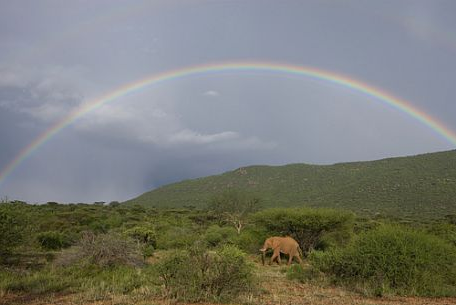
Elephant Under a Rainbow, Kenya, by Michael Nichols
 Taken individually, on your computer screen for instance, these images have much more resonance. They are not simply beautiful, but astonishing. They need to be focused on, they require stories to be told. Beauty doesn't begin to explain it.

Wednesday, October 27, 2010

Unknown Treasure: Another View of Babe Ruth's Farewell

Tonight is the opening game of the 2010 World Series, and in honor of that I thought we would take a look at what many people consider to be the greatest baseball picture ever taken,  Nat Fein's photo of Babe Ruth biding farewell to fans at Yankee Studium. the house that he built.


"Babe Bows Out," by Nat Fein
Ruth, 53 and mortally ill with cancer—he would be dead two months later—put on his pinstripes for the ceremony that day, June 13, 1948. Fein, a photographer working for the New York Herald Tribune, was kneeling on the third-base side of home plate when he shot the black-and-white image. Somebody somewhere gave it a title, "Babe Bows Out." (If anyone has info on who wrote that, let me know!) The following year Fein's shot became the first sports photograph to win the Pulitzer Prize.

Back in 2002, when I was editing a photography magazine, I got a call from my friend Neil Leifer, who besides being one of the great sports photographers of his time is also an avid student of sport photography history. He let me know that there was another great shot of Ruth's farewell taken that day—a shot that no one had ever seen. Was I interested? Oh, yeah. The picture was taken by Ralph Morse, one of Life magazine's cadre of renowned photographers. You can actually see Morse in Fein's photograph—he's kneeling along the first-base line, the second photographer from the right. His position meant that his picture would feature something that Fein's did not: the Babe's face. And one other thing: Morse was shooting color. And here's what he got:


Babe's Farewell by Ralph Morris
Leifer discovered Morse's photo while researching a documentary on sports photography he was co-producing for HBO. "I teased him about being in Fein's great picture," Leifer told me, "and Ralph said, 'Wait a minute, you should see my shots. They're not bad!" In fact, Morse said he preferred his own shot to Fein's because "I didn't get a bunch of the press in my shot." There is also the gaunt, joyless face—we can see in Morse's photo just how sick Ruth was.

Which shot do you like better, Fein's or Morris's?

So why didn't Life run the Morris shot? Probably because the photographer was shooting Ekachrome with his Rolleiflex camera. In 1948 color printing was very expensive and even big magazines like Life used it sparingly. It wasn't published until Sports Illustrated picked it up for an anthology some years later. Then it was forgotten again. Today you can find a series of Morse's pictures from that day at Life.com, but not this shot. (At least I couldn't find it.)

For you National League fans, I should point out that Morse took another great picture that did indeed go on to become famous—the picture of Jackie Robinson stealing home against the Yankees in the 1955 World Series.


Jackie Robinson steals home, 1955 World Series, by Ralph Morse
Good luck tonight to the Texas Rangers and the San Francisco Giants. Especially the Giants.

Tuesday, October 26, 2010

Blog Notes: Injured Photojournalist, Photography's New Daily News, and Art that Heals

Najaf, Iraq, August 22, 2004, by Joao Silva
Photo blogs are full of interesting things today, so let's aggregate.

The New York Times's "Lens" blog, one of my favorites (as readers of this blog know) focuses on Joao Silva, who was severely wounded on Saturday while working in southern Afghanistan, near the town of Arghandab. He stepped on a landmine while embedded with the U.S. Army's Fourth Infantry Division. A longtime contract photographer for the Times, Silva suffered severe injuries to his legs, but according to the newspaper's executive editor, Bill Keller, he "continue to shoot pictures" throughout the ordeal. (Three American soldiers suffered concussions in the incident.) The blog today reports that Silva had awoken from sedation in a hospital in Germany and was able to speak with his family. It features a slide show of his work (example above) and an interview he did in 2009 with photographer Michael Kamber, another Times contributor. Here's an excerpt:

Q. People have real misconceptions about what we do. In fact, many people view photographers as being vultures, that we make a living from people suffering.
A. This is not the case in most situations. There’s a real need to show what’s going on. Sometimes we do that at great risk. If we’re with a Marine unit or a naval unit and they’re taking fire, you’re taking fire. For the most part, I find that the soldiers who we are embedded with understand. But I think the broader public has a skewed idea of what we do. And sometimes we are callous. Sometimes we’re forced to step over corpses to make an image, or through pools of blood. But in doing that, we try to show the world the reality of the situation we’re confronted with. You might not necessarily change the world with your images—in fact, I don’t think I’ve seen one image that’s changed the world—but if you’ve changed one single person’s mind, I think you’ve accomplished something.

Meanwhile, in France a band of astute and experienced editors have now officially launched La Lettre de la Photographie, a new daily online magazine full of news, portfolios, history, and more. You don't have to read French, because it is published in English, too. Full disclosure: The astute and experienced editor in charge is an old friend and associate of mine, Jean Jacques Naudet, who for years was the redactor en chef of French Photo magazine and for the past couple of decades was the editor at large of American Photo. Last night he emailed "La Lettre" was required reading for anyone in the photo business and anyone interested in the art of photography.

At the Huffington Post there is a wonderful story, written by one Max Eternity, the editor of Art Digital Magazine, about a group of artists who have come together to help one of their own. Freelance artist Scott Andresen was badly injured in early July. After much care he was able to stand and walk, but barely. Financially, he was in a crisis. Several artists, including Nari Ward, have organized a benefit auction to be held at the Collette Blanchard Gallery in New York on November 3rd. The story will remind you how, in many ways, art heals.

Monday, October 25, 2010

This Week in the Visual Culture: Two Prizes and a Prized Job

1. Darcy Padilla Wins Smith Grant
Julie Baird with her daughter, 1993. Baird died of AIDS in September leaving several children
The winner of the $30,000 W. Eugene Smith Grant for Humanistic Photography, Darcy Padilla, has already created a visual epic. Her intensely intimate story of the life and death of Julie Baird spans 17 years, starting with a chance encounter in a hotel lobby in 1993 and ending with Baird's death from AIDS on September 27 in  Alaska. The photographs have the emotional resonance you find in much of Eugene Richards's work, and I'm hard pressed to think of anything I've ever seen with its sustained focus. In the press release put out by the Smith Foundation, Padilla says that she initially imagined the story as "an updated, urban version" of Smith's famous 1948 "Country Doctor" photo essay. It became something more like photographic novel—a very sad, very detailed story of  singular personal defeats from drugs, disease, poverty, and the need for love, or at least nurture. Each of those defeats seems to send out concentric waves of tragedy that spill over the edges of the photographs themselves. 

2. Anonymous Photographer Wins TED Prize


This award sort of puts the Smith Grant in perspective. The TED Prize, an annual prize worth $100,000 that goes to people who have "one wish to change the world," has been awarded this year to an anonymous street artist who combines photography and graffiti—he calls himself a "photograffeur"—to create unique installations in unexpected places. Here is the TED citation:
JR creates pervasive art that spreads uninvited on building of Parisian slums, on walls in the Middle East, on broken bridges in Africa or in favelas in Brazil. People in the exhibit communities, those who often live with the bare minimum, discover something absolutely unnecessary but utterly wonderful. And they don't just see it, they make it. Elderly women become models for a day; kids turn into artists for a week. In this art scene, there is no stage to separate the actors from the spectators.
Above and below are some of JR's pieces. He says his idea is to provoke change by fostering community. What do you think? Can art in general, and this art in particular, do that?


3. Chris Boot Becomes Aperture's Executive Director

This news isn't about a prize, but it is about a prized job. Photo District News reports that the esteemed publisher and former Magnum agency head Chris Boot will become the new executive director of the esteemed Aperture Foundation, the non-profit founded back in the day by Ansel Adams, Minor White, and other.  The foundation has gone through several chiefs since the death of its longtime director, Michael Hoffman, in 2001. Boot replaces Juan Garcia de Oteyza, who has had the job since 2008. Boot has spent the past decade or so publishing a wide range of astonishingly good books under his own imprint, Chris Boot, LTD, featuring such photographers as Luc Delahaye, James Mollison, and, most recently, Tim Hetherington. It will be interesting to see what his impact will be on Aperture's book division, one of the liveliest in the photo world.